









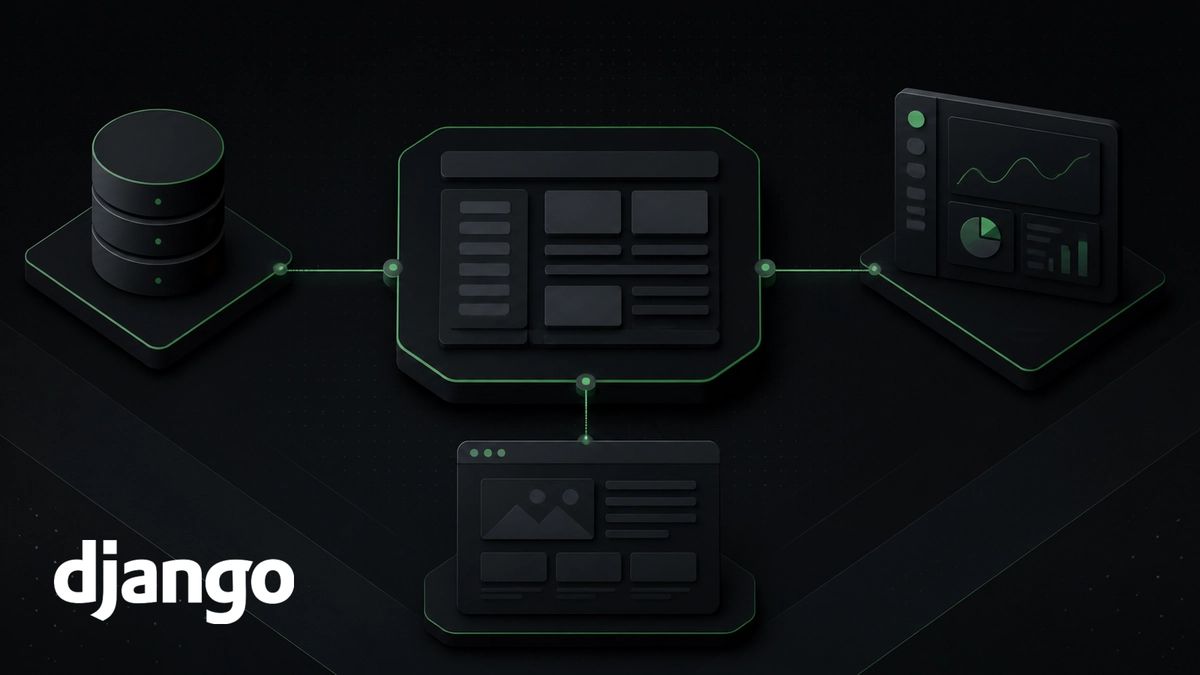
If you are wondering why to use Django, the short answer is that Django gives you a strong starting point for building a website or web app. It already includes many of the things you would otherwise have to find, connect, and maintain yourself.
That means you can spend more time building the part that makes your project special. Django takes care of a lot of the common work around users, forms, data, security, and managing your content.
1. Django gives you a working foundation
Starting a web app from nothing can feel like opening an empty room and being asked to build the walls, doors, and electricity before you can put anything inside. Django gives you a well-organised foundation from the start.
It gives your project a clear way to handle web pages, save information, process forms, and connect the different parts of your app. You still decide what your project does, but you do not have to invent the basic structure every time.
This is one of the main reasons Django is used: it helps you get from an idea to a real working project without rebuilding the same starting point again and again.
2. You receive a fully working admin panel
When you connect your project's data to Django's admin, you receive a fully working admin panel where you can manage your whole website and app. You can add, change, search, filter, and remove information through a normal web interface.
That can include blog posts, customers, products, bookings, pages, orders, or anything else your project needs to store. You do not have to build a separate content-management screen before you can manage your own app.
The admin is not the public website. It is the private work area behind it. This makes Django especially useful when you or a team need to keep information up to date without editing code every time.
3. Django already knows how to work with your database
Your website needs somewhere to store its information. Django already built the tools you need to access that database. This means you do not have to write specific database code for every basic task; you can reuse Django's code and describe the information your project needs.
In simple terms, you tell Django what a customer, article, or product looks like. Django then helps you create the right place for that information, find it later, update it, and show it in your website or admin panel.
You can use a small local database while learning and choose a larger database when your project grows. The important part is that your project can keep the same general way of working with its data.
4. Common website tasks are already covered
Most websites need the same kinds of building blocks. People need to log in. Forms need to accept information. Pages need to show saved data. Users need different levels of access. Emails may need to be sent. Tests should check that important things still work.
Django includes ready-made tools for these common jobs. You can use them as they are, change them to fit your project, or add your own behaviour when your project needs something different.
This is why we use Django instead of writing every part ourselves: the boring but important work already has a home, and you can focus on the parts your visitors actually care about.
5. Django helps you build safer projects
Security is not one button you turn on at the end. It is something a web framework should help you think about throughout the project.
Django includes protections and guidance for common web risks, such as unsafe form requests, password handling, and displaying information supplied by users. It also has a security team and a documented process for dealing with security problems.
You still need to configure and maintain your project carefully. Django cannot make an app safe if its code, passwords, hosting, or permissions are handled badly. But starting with a framework that already takes common risks seriously gives you a much better foundation.
6. You can start small and grow later
Django works for a small personal project, but it does not force you to throw everything away when the project becomes more serious. You can begin with a simple website, then add accounts, payments, background work, an API, or more detailed admin workflows as the need appears.
There is no requirement to use every Django feature on day one. You can learn one part at a time. That makes Django a good choice for someone starting out, especially if they want a framework they can continue using as their skills and project grow.
7. Django has a large community and clear documentation
- You can follow official tutorials when you are learning.
- You can find explanations for the features Django includes.
- You can use packages made by other Django developers when they solve a real need.
- You can ask questions and learn from projects that have been built before yours.
When should you use Django?
Django is a good choice when your website or web app needs saved information, user accounts, a private area, forms, or a clear way to manage content. It is especially useful when you want more than a collection of static pages.
You may not need Django for a tiny page that never changes, a simple landing page, or a project where another tool already handles everything you need. Choosing Django does not mean choosing the most complicated option. It means choosing a useful foundation when your project has real data and real behaviour.
For someone new to Django, I would start with the official tutorial and build one small project. Once you see the admin panel, forms, and saved data working together, the reason to use Django becomes much easier to understand.
Frequently asked questions
Why is Django used?
Django is used to build websites and web apps with less repeated work. It includes tools for pages, data, forms, users, permissions, security, testing, and a working admin panel.
Why do people choose Django?
People choose Django because it gives them a complete and dependable starting point. It is useful for projects where the team needs to store information, manage it, and give different people access to different parts of the app.
Is Django good for beginners?
Django can be a good choice for beginners who want to learn how real websites work. There is a lot to learn, but the official documentation and tutorials give you a clear path, and Django provides useful results early on.
When should you not use Django?
You may not need Django for a completely static page or a very small project with no saved data, users, or private management area. For anything more active, Django may save you time as the project grows.
Django at a glance Official overview of Django's database-driven web app tools.
The Django admin site Official documentation for Django's built-in admin interface.
Django security Official overview of Django's security tools and guidance.